Icon of the Seas: a floating resort city
Twenty decks, eight neighbourhoods and nearly 10,000 people at full capacity. We read the world’s largest cruise ship as a vertically integrated resort city: its blueprint, its business model and how it runs every day.
Royal Caribbean International · built by Meyer Turku, Finland
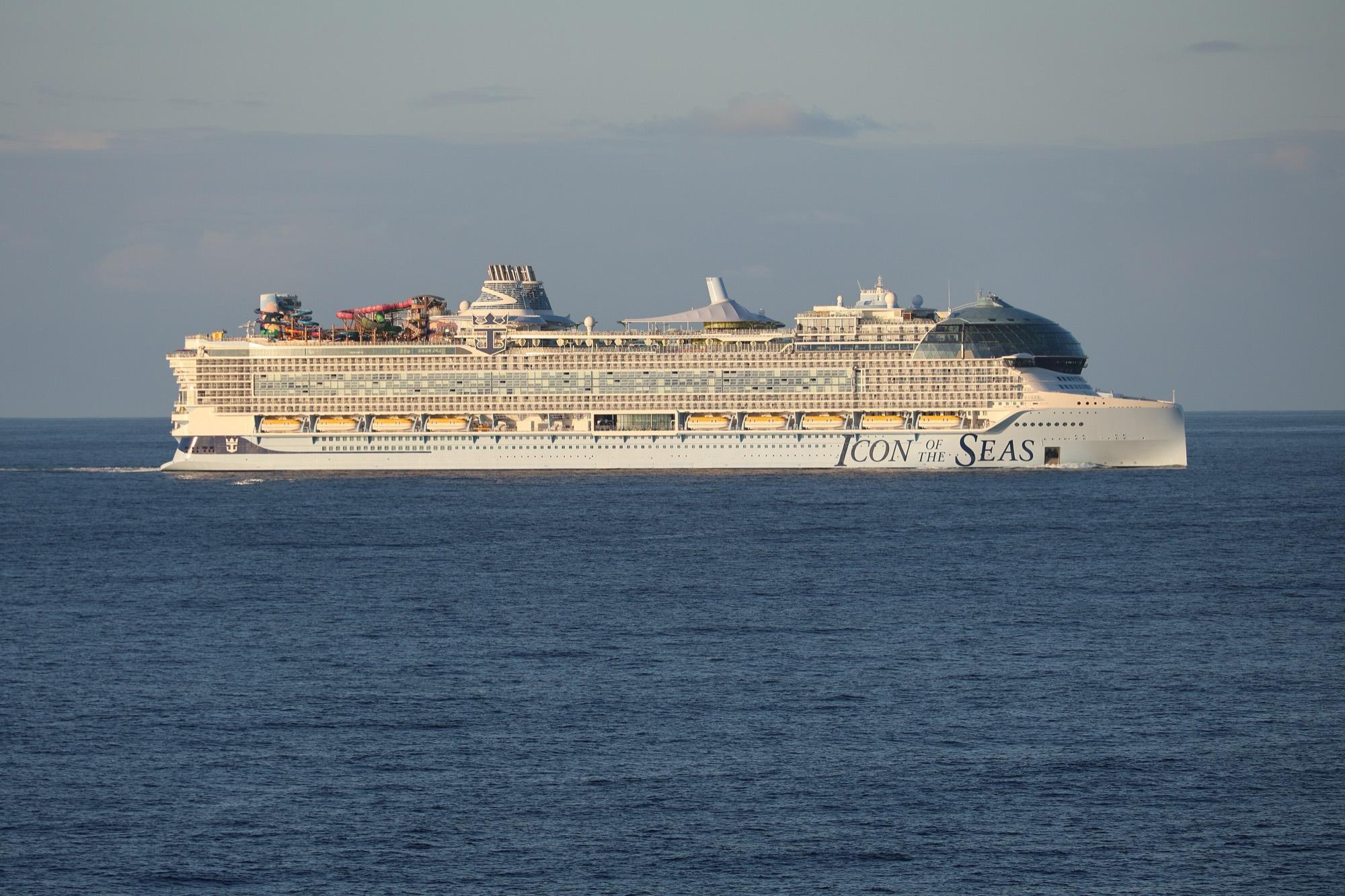
- Gross tonnage
- 248,663
- Length
- About 365 m
- Decks
- 20, of which 18 for guests
- Guests
- 5,610 double, about 7,600 max
- Crew
- About 2,350
- Staterooms
- 2,805
- Fuel
- Liquefied natural gas
- Maiden voyage
- January 2024
Icon of the Seas is not simply a passenger vessel. With about 8,000 people aboard at double occupancy, including crew, it has the population of a substantial urban district, and the infrastructure, public realm, food economy and workforce to match.
That is why it belongs in Iconictures. It shows how architecture, maritime engineering, hospitality, retail, entertainment and utilities can be planned as one system, and what that teaches cities.
01The architectural blueprint
Its defining move is urban: the ship is organised into eight recognisable neighbourhoods, distinct districts joined by shared circulation and infrastructure.
Eight neighbourhoods · one ship
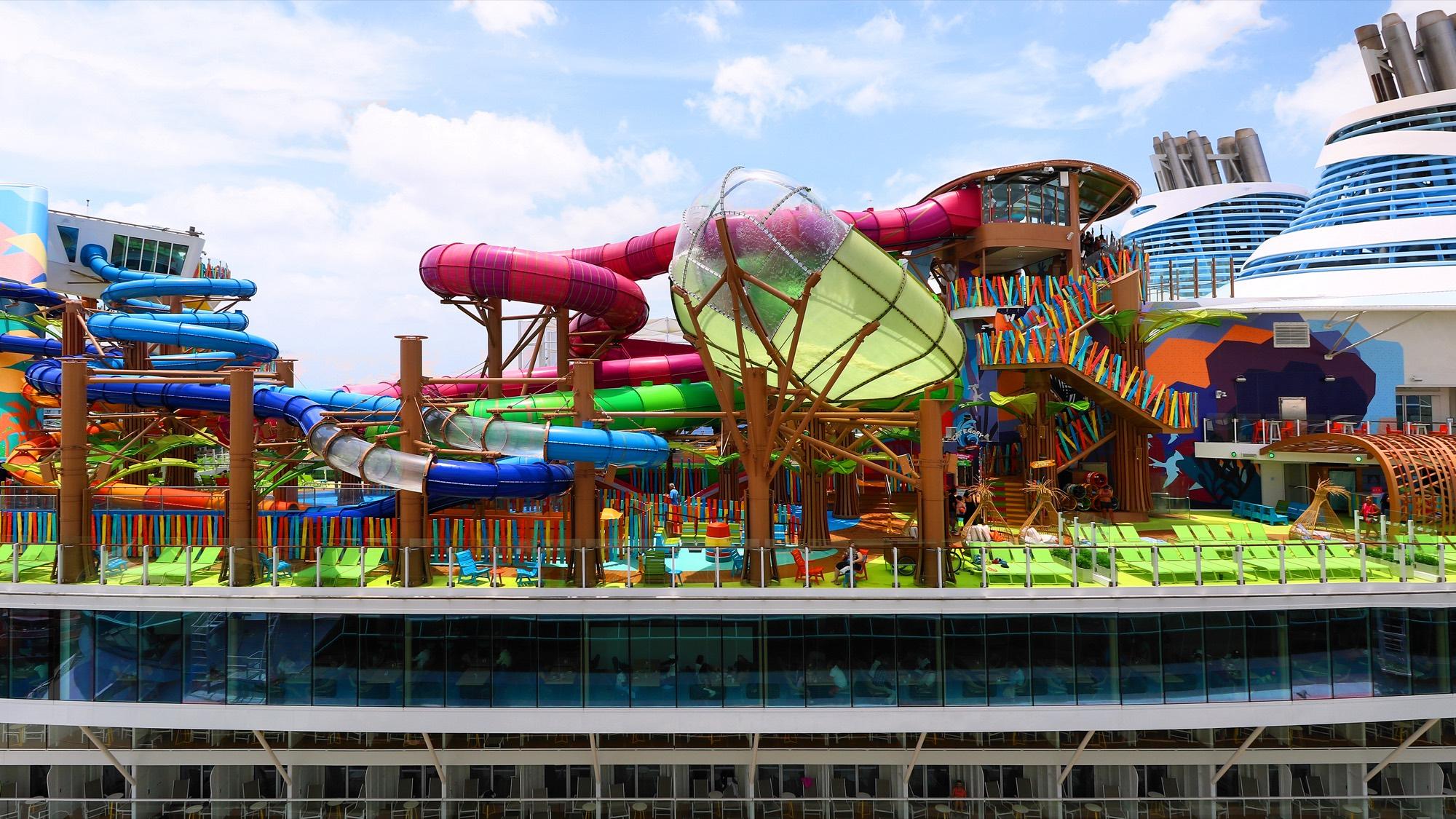
- 1Thrill IslandWaterpark, slides, climbing, FlowRider
- 2Chill IslandPools, sun decks, bars, whirlpools
- 3SurfsideFamily pools, arcade, carousel, family dining
- 4AquaDomeAquatheater, dining, panoramic spaces
- 5Central ParkLiving gardens, restaurants, open sky
- 6Royal PromenadeRetail, dining, bars, entertainment
- 7Suite NeighborhoodPremium suites, private pool and dining
- 8The HideawayAdults only, suspended infinity pool
02Six systems designed together
- 01
Residential
Interior, ocean view, balcony, family, accessible and suite accommodation, plus crew housing, each a price point.
- 02
Public realm
Central Park turns landscape into a destination: more than 30,000 plants, paths, seating and restaurants.
- 03
Commerce and entertainment
The Royal Promenade works as the main street: shops, bars, restaurants, casino and venues.
- 04
Aquatic and recreation
Seven pools, nine whirlpools and six major waterslides across the upper decks.
- 05
Premium hospitality
The Suite Neighborhood is a differentiated luxury product with its own amenities.
- 06
Back of house
Kitchens, stores, laundry, waste processing, workshops, medical, water production and energy.
The visible resort depends on invisible operations. The two have to be designed together, not one after the other.
03The business model
The ship sells a complete holiday, not transport between ports. Four businesses share one asset: accommodation, hospitality, entertainment and destination tourism, including private destinations such as Perfect Day at CocoCay.
- Royal Caribbean Group revenue, 2025
- $17.9bn
- From passenger tickets
- $12.5bn
- From onboard and other spending
- $5.4bn
- Of revenue earned once guests are aboard
- ≈30%
Company wide figures from Royal Caribbean’s 2025 financial statements, not the performance of Icon of the Seas alone.
Free facilities attract guests, raise satisfaction and bring them back; optional premium services raise spending per passenger. Selling happens twice: before departure through fares, packages and excursions, and on board through food, recreation and retail.
| Assumption | Calculation | Revenue |
|---|---|---|
| Cruise fares | 5,330 guests × $1,800 | $9.59m |
| Onboard spending | 5,330 guests × $800 | $4.26m |
| Total, one voyage | $13.86m |
Profit depends on occupancy and yield, spending per day, fuel, crew productivity, food procurement and waste, port charges, maintenance, insurance and financing. It is a capital intensive asset that must stay full and run efficiently.
04How it runs every day
The Captain holds overall command and maritime safety. Beneath sit the Hotel Director, Chief Engineer, marine operations, food and beverage, entertainment, safety and security, finance and human resources.
| Time | Activity |
|---|---|
| 05:00–06:00 | Engineering checks, cleaning and preparation |
| 06:00–08:00 | Breakfast, fitness and morning activities |
| 08:00–12:00 | Pools, waterpark, excursions and children’s programmes |
| 12:00–14:00 | Lunch and recreation |
| 14:00–17:00 | Entertainment, spa, sport and family activities |
| 17:00–19:00 | Dining and guest services |
| 19:00–22:00 | Theatre, live shows and nightlife |
| 22:00–01:00 | Casino, bars, late entertainment and security |
| 01:00–05:00 | Overnight maintenance, cleaning and preparation |
Food as industrial catering
Forecasting, supplier contracts, port side inspection, cold storage, central and specialist kitchens, distribution, then waste monitoring and quality control.
A self contained utility
LNG fuel, power, propulsion, HVAC, desalination, wastewater treatment, waste processing, fire safety and shore power connection. LNG is cleaner, but not zero emission.
| Area | Requirement |
|---|---|
| Maritime safety | SOLAS compliance |
| Pollution prevention | MARPOL compliance |
| Food safety | HACCP based management |
| Passengers | Muster procedures and drills |
| Environment | Waste, emissions and wastewater controls |
| Crew | Accommodation, training and occupational safety |
05What cities can learn
| On the ship | In the city |
|---|---|
| Eight neighbourhoods | Mixed use urban districts |
| Central Park | Green infrastructure and public realm |
| Royal Promenade | Commercial streets and pedestrian corridors |
| Suite Neighborhood | Premium hospitality and residential districts |
| AquaDome | Cultural and entertainment destinations |
| Integrated utilities | District wide infrastructure systems |
| Passenger management | Urban mobility and crowd management |
| Destination partnerships | Tourism led economic development |
- 01
Integrated planning creates value
Architecture, hospitality, entertainment and infrastructure designed as one system.
- 02
Differentiation multiplies revenue
Distinct neighbourhoods create distinct experiences and spending occasions.
- 03
Infrastructure carries the business
Energy, water, waste, movement and maintenance are fundamental, not background.
- 04
Experience is an economic asset
It sells a destination, not a bed or a journey.
- 05
Management decides viability
A great concept succeeds only with disciplined operations, finance and maintenance.
Sources
Institutional engagement
Planning a waterfront destination?
We bring integrated planning, commercial structuring and operational thinking to waterfront districts, resorts and terminals.