Case noteIndustrial infrastructure
Ajaokuta Steel: 98% complete in 1994, and still no liquid steel
A steel plant is complete when it makes steel, not when its equipment is installed. What Ajaokuta teaches about how Nigeria measures strategic infrastructure.
RICITIES research · 10 min read
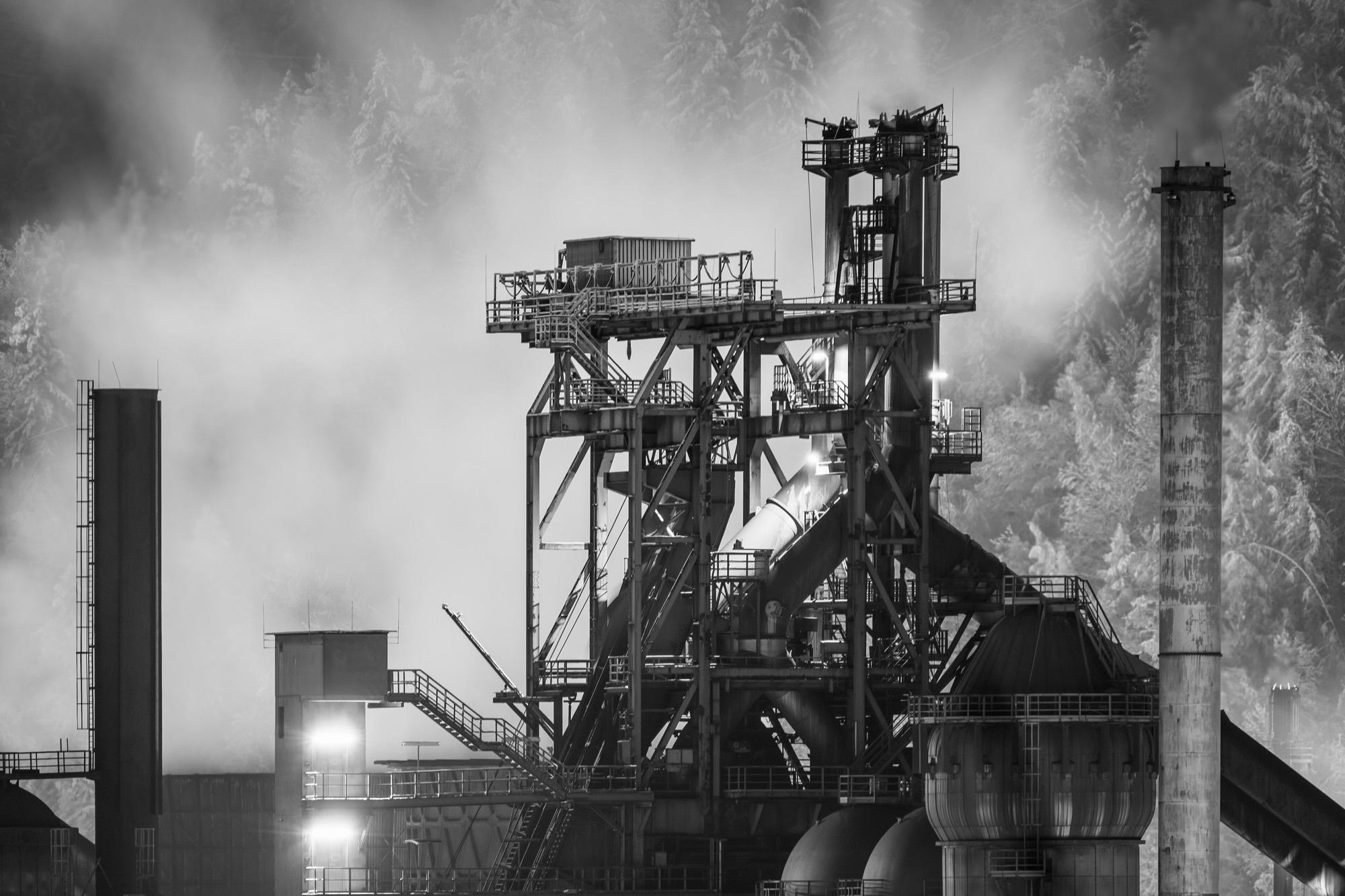
The story of Ajaokuta Steel Company is not simply about an unfinished factory. It asks how a country measures whether strategic infrastructure is complete.
A steel plant is complete when its integrated production system can reliably turn raw materials into saleable steel at sustainable cost. The famous figure of 98% completion in 1994 is a historical claim about installation, not proof that the plant was 98% operational or able to make liquid steel.
01What 98% actually measured
The company’s own history says the figure referred to equipment erected, and that some completed units ran intermittently before shutting down for lack of funds. A 2022 academic study confirms the percentage was based on the weight of installed materials, not verified production capability.
| Measure | What it establishes | What it does not |
|---|---|---|
| Civil construction | Buildings and structures erected | Production readiness |
| Equipment installation | Machinery physically in place | Machinery tested and integrated |
| Mechanical completion | Installed to specification | Successful process commissioning |
| Operational commissioning | Systems tested under load | Sustained commercial production |
| Commercial operation | Saleable product made consistently | Profitability or long term viability |
02Why it never made liquid steel
Integrated steel production chain · 1.3 million tonnes a year design target
- 01Iron oreExtraction and beneficiation at ItakpeOre needed beneficiation; furnace suitability questioned
- 02Rail and river portOre by rail, imported coking coal by riverExternal rail, road and port links not completed
- 03CokeCoke ovens prepare furnace fuelLocal coal unsuitable; imports required
- 04Blast furnaceIronmaking: the heart of the plantPart of the unfinished 2%, never commissioned
- 05SteelmakingBasic oxygen converters make liquid steel
- 06CastingContinuous casting into semi finished products
- 07RollingFinishing into saleable steel
Every later stage was installed to a high degree, but nothing downstream can run if the furnace and its supply chain do not. In an integrated plant, the last 2% can be the part that matters most.
- 01
The missing 2% was not ordinary
A former employee told ICIR the unfinished share included the blast furnace and auxiliary plants. A missing furnace or control system is not equivalent to an unfinished office block.
- 02
Raw materials were never secured
Ore needed beneficiation, local coal did not suit the coke process, imported coal needed a river port and Itakpe needed a dedicated railway. All were known at the planning stage.
- 03
Outside infrastructure lagged
A former sole administrator cited the absence of external roads, railway and supply infrastructure as a major obstacle to commissioning. A plant without its logistics is structurally incomplete.
- 04
Funding and governance broke down
Work halted at the end of 1983 when payments stopped. Disputes, political transitions and a 2000 to 2007 public private arrangement that ended in litigation followed.
- 05
Technology aged in place
Equipment designed in the 1970s cannot be assumed to meet today’s standards. Engineers say control systems in particular would need modernising or replacing.
03A conditional assessment
| Dimension | Concern | Condition for revival |
|---|---|---|
| Physical assets | Extensive equipment installed | Asset by asset condition audit |
| Metallurgy | Furnace and auxiliaries not commissioned | Verified furnace integrity and testing |
| Raw materials | Beneficiation and coking coal | Long term supply contracts |
| Logistics | External connectivity | Working rail, port and freight |
| Utilities | Reliability unverified | Tested power, water and energy |
| Technology | Ageing controls and equipment | Modernise or replace where justified |
| Governance | Funding and contract discontinuity | One accountable authority |
| Commercial | No sustained production | Independent demand and cost study |
| Environment | Legacy industrial site | Remediation and compliance |
| Workforce | Existing expertise | Updated training and readiness |
04What Nigeria lost
- Industrial value added: domestic minerals never became machinery, inputs and construction materials at scale.
- Import dependence: manufacturers and builders kept relying on imported steel.
- Industrial linkages: the expected ecosystem of engineering, fabrication, mining and maintenance did not emerge.
- Infrastructure returns: rail, ports, energy and mining investments earned less without the plant they were meant to serve.
05Where it stands now
In September 2024 the Federal Ministry of Steel Development announced a memorandum of understanding with Tyazhpromexport, the original Russian builders, and consortium partners to rehabilitate, complete and operate Ajaokuta and the National Iron Ore Mining Company. It later said a full technical and financial audit was under way, and that a 2018 audit had found the plant generally robust apart from normal wear of replaceable parts, recommending automation of manual controls.
These are official statements. They are not evidence that the plant has been recommissioned or has produced liquid steel.
06From completion to production
- 01
Independent technical and financial audit
The real condition of every unit, utility and structure, with past spending, liabilities and contracts reconciled.
- 02
Feasibility and technology review
Is blast furnace and basic oxygen steelmaking still right, or does phased modernisation with alternative technology make more sense?
- 03
Integrated infrastructure
Beneficiation, rail, port, power, water, gas and industrial roads delivered with the plant, not after it.
- 04
Phased commissioning
Unit testing, stable integration, furnace commissioning, verified first liquid steel, then casting and rolling.
- 05
Commercial operation
Suppliers, customers, offtake, maintenance, workforce and downstream manufacturing partners.
| Report this | With this evidence |
|---|---|
| Equipment readiness | Independently certified operational equipment |
| Commissioning | Verified first liquid steel |
| Capacity use | Output against installed capacity |
| Quality | Compliance with steel standards |
| Raw materials | Contracted and delivered volumes |
| Energy | Measured power availability |
| Commercial | Sales, operating cost and cash |
| Environment and jobs | Emissions, waste and water monitoring; jobs sustained |
POSCO, South Korea
Long term industrial planning, technical capability and continuous efficiency investment.
India
Several production models, strong domestic demand and phased capacity growth.
Duisburg, Germany
Industrial clustering, specialised logistics and downstream manufacturing.
Türkiye
Port linked production tied to construction and export markets.
Sources
Institutional engagement
Reviewing a stalled strategic project?
We help governments and investors separate physical progress from productive capacity, and plan the route from one to the other.
Keep reading
More from the knowledge centre
 Benchmark study
Infrastructure competitiveness18 min read
Global Cities Standard Benchmark: a conditional assessment of Lagos infrastructure
Ten infrastructure systems, six reference cities and one question: is Lagos building for performance or for visibility? Our flagship study, with a scorecard, a sector by sector review and a proposed performance index.
 Perspective
Waterfront economies14 min read
The economics of inclusive, vibrant and resilient waterfronts
The best waterfront is not the one that maximises shoreline property values. It is the one that maximises participation, environmental performance and public value across the whole waterfront economy.
 Perspective
Urban philosophy9 min read
Urbansophy: the six places of a healthy city
Why do we still build cities that fail the people in them? Our philosophy of the city, from its five components to the six places every settlement needs.