Benchmark studyInfrastructure competitiveness
Global Cities Standard Benchmark: a conditional assessment of Lagos infrastructure
Ten infrastructure systems, six reference cities and one question: is Lagos building for performance or for visibility? Our flagship study, with a scorecard, a sector by sector review and a proposed performance index.
RICITIES research · 18 min read
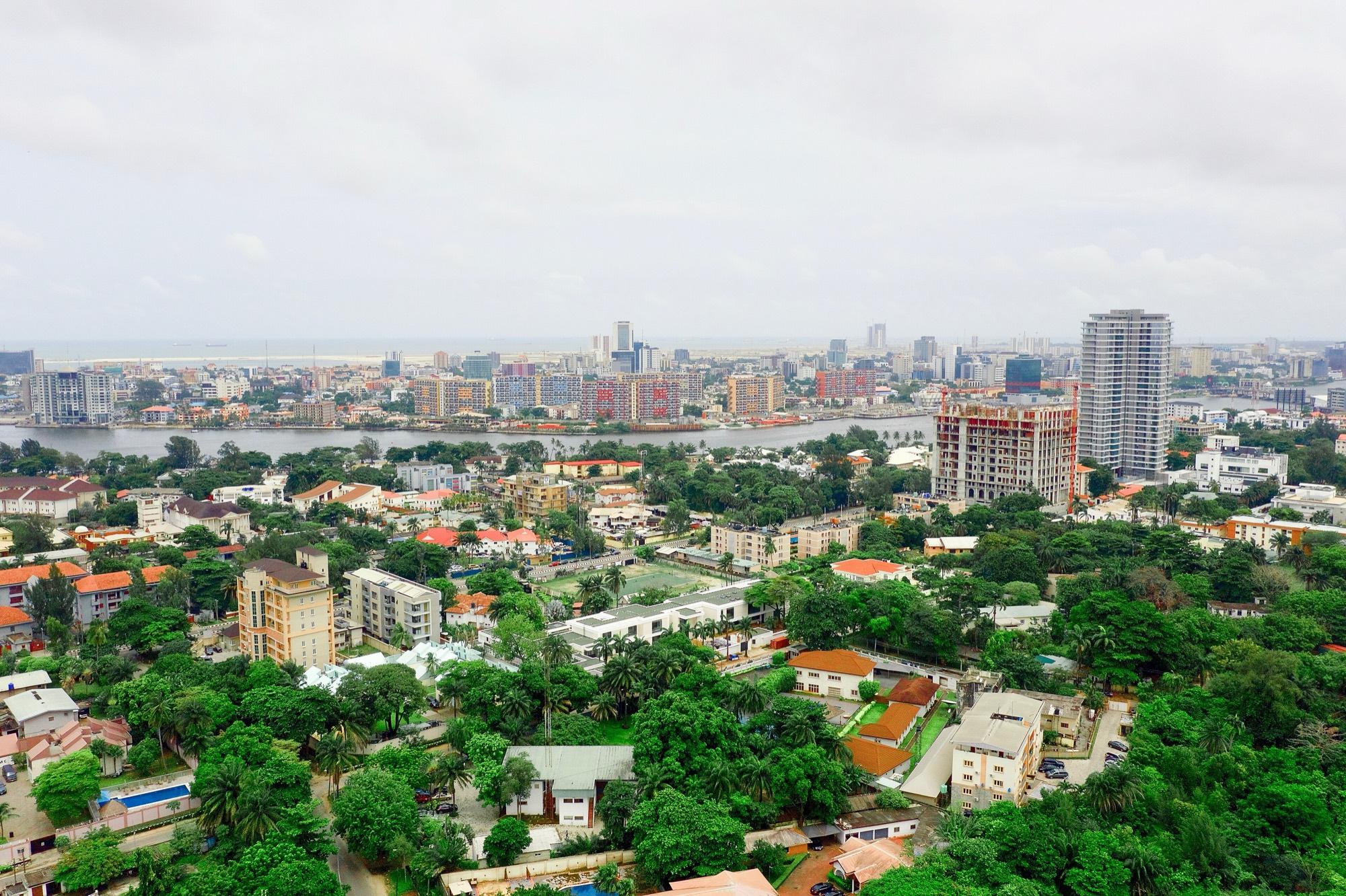
Lagos has the scale, location, enterprise and talent to compete with the leading emerging global cities. Its economic activity is not yet matched by the consistent provision and performance of essential infrastructure.
The problem is not simply a deficit. It is a structural gap between urbanisation, economic growth, investment, spatial planning, institutional coordination and measurable outcomes. The Blue and Red Lines, BRT, Omi Eko and the proposed Green Line show a real turn towards multimodal infrastructure, but the existence of projects does not prove the metropolitan system is well served, efficient, sustainable or inclusive.
Lagos must move from infrastructure project expansion to integrated metropolitan performance, economic competitiveness and measurable public value.
This is a preliminary strategic study by RICITIES, assessed in November 2026 across Lagos State and its functional interfaces with Ogun State. It is not an engineering survey, audited ranking or infrastructure census. World Bank figures are a 2023 baseline, not current measurements.
01Principal findings
- Transport investment is advancing, but coverage, interchanges and affordability need stronger measurement.
- Water supply, wastewater and sanitation remain fundamental priorities.
- Flood management and coastal resilience must be built into planning, land use rules and investment.
- Housing, serviced land and neighbourhood infrastructure must connect better to jobs and transit.
- Reliable electricity and distributed energy are essential to productivity.
- Waste management should become a circular, resource recovery system.
- Public space, waterfronts and green infrastructure are productive assets.
- Spatial data and metropolitan data governance must underpin planning and accountability.
- Coordination across Lagos, Ogun and federal institutions needs strengthening.
- Public investment needs transparent economic, environmental, social and lifecycle appraisal.
02A conditional benchmark
Lagos cannot be compared mechanically with cities that have different economies, institutions, populations, climates and budgets. The question is not whether Lagos looks like Singapore or Copenhagen. It is whether Lagos is choosing the most efficient, affordable and adaptable solutions to its own challenges.
- A
Documented evidence
Government policy, agency publications, development plans and programmes.
- B
Comparative evidence
Established planning principles and tested international solutions.
- C
Conditional assessment
Our professional judgement of whether Lagos’s direction meets the benchmark.
- D
Data gaps
What still needs surveys, verification, geospatial analysis or statistics.
03Six reference cities
- Integrated metropolitan planning
Singapore
Move from fragmented programmes to coordinated metropolitan planning.
- Climate resilience and water
Rotterdam
Plan erosion, tidal flooding and storm water into development.
- People centred mobility
Copenhagen
Walking, cycling and public space reduce car dependency.
- BRT and transit oriented growth
Curitiba
Organise homes and jobs around transit, and protect affordability.
- Regeneration and innovation districts
Barcelona
Turn underused industrial land into productive districts.
- High density rail economics
Hong Kong
Make stations economic nodes, not isolated facilities.
These are transferable principles, not instructions to reproduce another city wholesale. Curitiba also carries a caution: transit oriented development must protect affordable housing, so the benefits of better access are not captured only by wealthier owners.
04The preliminary scorecard
- 01Metropolitan transport and mobilityDevelopingMajor projects exist; network integration and coverage remain the priority.
- 02Water supply, wastewater and sanitationCritical gapUniversal, reliable service remains a major challenge.
- 03Flood management, drainage and coastal resilienceHigh risk gapWatershed planning and climate adaptation need far greater integration.
- 04Housing, land servicing and neighbourhoodsStructural gapAffordability, infrastructure and location do not line up.
- 05Electricity and energyCritical gapReliability and cost hold back productivity.
- 06Solid waste and the circular economyDevelopingResource recovery needs substantial expansion.
- 07Industrial, maritime and metropolitan logisticsOpportunity with constraintsStrong economic assets held back by congestion and weak integration.
- 08Green infrastructure, public space and waterfrontsStructural gapPublic access and ecological resilience need investment.
- 09Health, education and social infrastructureNeeds evidenceSpatial access and service quality need to be measured.
- 10Digital infrastructure, spatial intelligence and governanceDevelopingMore interoperability and open data are needed.
Lagos has established important programmes. Its greatest challenge is making them add up. A project can succeed on completion and still fail on service availability, operational efficiency, economic productivity or social and environmental value.
05Sector by sector
Each of the ten systems is assessed on its current position, a global benchmark, priority interventions and the indicators that should govern it. Choose a sector to explore.
Sector 01
Metropolitan transport and mobility
Partially developedLagos has a diversifying framework: the Blue and Red Lines, proposed Green, Purple, Yellow and Orange corridors, BRT, Quality Bus Corridors, standard and feeder buses, ferries and the Omi Eko programme, coordinated by LAMATA. Coverage, feeder services, affordability and interchanges still lag. A rail line is not a success because of the kilometres built.
Global benchmark
Singapore and Hong Kong for integrated rail and bus; Curitiba for coordinating BRT with land use.
Measure it by
- Public transport mode share
- Door to door journey time
- Residents near mass transit
- Fare as share of income
- Service reliability
- Commuter hours saved
Priority interventions
- 01Complete and integrate the Blue Line
- 02Extend and improve the Red Line
- 03Bankable feasibility and finance for the Green Line
- 04Protect rights of way for future rail corridors
- 05Expand BRT and Quality Bus Corridors
- 06Integrate ferries with rail and bus stations
- 07Common fares and passenger information
- 08Better walking access to stations
- 09Transit oriented economic districts
- 10Public transport performance reporting
06Measure outcomes, not outputs
- Roads constructedTravel time and logistics costs reduced
- Rail kilometres completedPassengers carried and commuter hours saved
- Housing units deliveredAffordable homes occupied by target groups
- Drainage channels builtPeople and assets protected from flooding
- Water facilities commissionedHouseholds with reliable potable water
- Generation capacity installedReliable power at competitive cost
- Waste collectedWaste recovered and value generated
- Parks developedAccessible green space and environmental benefit
- Hospitals constructedTimely, affordable care received
- Digital systems deployedFaster, more transparent public services
07A Lagos Urban Infrastructure Performance Index
Every major public investment should be assessed with one common system at four stages: before investment, during construction, at commissioning and after it opens. Each should show its rationale, beneficiaries, alternatives, environmental effects, lifecycle cost and service outcomes.
Lagos Urban Infrastructure Performance Index · proposed weights
- Economic competitiveness and productivity25%
- Socioeconomic inclusion and affordability20%
- Environmental sustainability and climate resilience20%
- Connectivity and spatial integration15%
- Financial viability and lifecycle value10%
- Governance and accountability10%
Rating scale
- 0–39Critical deficiency
- 40–59Weak
- 60–74Developing
- 75–89Strong
- 90–100Internationally competitive
08A phased programme
- 010 to 24 months
Build the evidence and act on urgent gaps
Know the city before committing the next generation of capital.
- Infrastructure condition and access audit
- GIS asset register
- Flood exposure and vulnerable settlement mapping
- Transport baselines
- Water and wastewater audit
- Independent appraisal of major projects
- Public performance dashboard
- Annual infrastructure performance report
- 022 to 5 years
Invest where impact is highest
Expand the systems that unlock everything else and connect them.
- Rail, BRT and ferry interchanges
- Priority water and sanitation schemes
- Flood retention and watershed works
- District and renewable energy
- Recycling and recovery facilities
- Selected settlement upgrading
- Logistics infrastructure
- Neighbourhood parks, clinics and schools
- 035 to 15 years
Transform the metropolis
Establish Lagos as a competitive, climate resilient metropolitan economy.
- An integrated mass transit network
- High capacity water and wastewater
- Coastal and flood resilience programmes
- Connected mixed use districts
- Affordable, transit oriented housing
- Industrial and maritime clusters
- A circular economy
- Lifecycle asset management and metropolitan governance
09Governance, finance and lifecycle
The answer is not more agencies. It is clearer responsibilities, better coordination and common performance obligations across planning, transport, waterways, environment and water, wastewater, waste, energy and housing, with local governments and federal institutions engaged where they hold jurisdiction.
Diversify how infrastructure is financed
PPPs, infrastructure bonds, subnational instruments where lawful, development finance, climate funds, land value capture, user charges, industrial partnerships and well structured concessions. Construction finance alone does not make a project financially sustainable.
Judge projects over their whole life
Land, design, construction, operation, maintenance, rehabilitation, mitigation and replacement. For rail, bridges, coastal defences and treatment plants, the cheapest build is rarely the most competitive over 30 or 50 years.
10Ten policy recommendations
- 01
An integrated spatial framework
Coordinate transport, housing, economic districts, utilities and ecology.
- 02
Essential infrastructure first
Water, sanitation, drainage, energy and transit access.
- 03
Competitive project appraisal
Economic, social, environmental and lifecycle tests before capital is committed.
- 04
Protect strategic corridors
Keep future transport and utility rights of way free of encroachment.
- 05
Transit oriented development
Affordable homes, commerce and public space at stations.
- 06
Climate resilience as a requirement
Flood, coastal, heat and environmental risk in every major development.
- 07
Productive regeneration
Jobs, industry, maritime activity and innovation alongside property.
- 08
Metropolitan governance
Lagos, its Ogun growth areas and federal institutions working together.
- 09
Transparency
Publish costs, progress, indicators and post completion evaluations.
- 10
Local engineering capacity
More Nigerian design, construction, systems integration and asset management.
11Making it measurable
- 01
Lagos Metropolitan Infrastructure GIS Atlas
A geospatial inventory of existing, planned and deficient infrastructure, coverage and gaps.
- 02
Global Cities Comparative Dashboard
Lagos quantified against Singapore, Rotterdam, Copenhagen, Curitiba, Barcelona and Hong Kong.
- 03
Infrastructure Investment Priority Scorecard
Project level returns, social benefit, climate resilience, lifecycle cost and readiness.
Sources
- 01World Bank (2023). Lagos Diagnostic Study
- 02LAMATA: Strategic Transport Master Plan, Climate Action Plan and Resilience Strategy library
- 03UN-Habitat: International Guidelines on Urban and Territorial Planning
- 04OECD: The Metropolitan Century and urban productivity research
- 05C40 Cities: Curitiba bus rapid transit
Institutional engagement
Help make the benchmark measurable
We are looking for agencies, researchers, funders and data partners to build the GIS atlas, the comparative dashboard and the project scorecard.
Keep reading
More from the knowledge centre
 Perspective
Waterfront economies14 min read
The economics of inclusive, vibrant and resilient waterfronts
The best waterfront is not the one that maximises shoreline property values. It is the one that maximises participation, environmental performance and public value across the whole waterfront economy.
 Perspective
Urban philosophy9 min read
Urbansophy: the six places of a healthy city
Why do we still build cities that fail the people in them? Our philosophy of the city, from its five components to the six places every settlement needs.
 Benchmark study
Waterfront economies12 min read
Ten waterfront precedents for an African waterfront economy
What Singapore, Hamburg, Cape Town and seven other cities teach about building a waterfront that works as an economy, not only as real estate.