Case noteWaterways
The ferry as public transport: notes from the Staten Island Ferry
New York runs a free, all year ferry as part of its transit network. Five lessons for the passenger jetties of Lagos and the Niger Delta.
RICITIES research · 6 min read
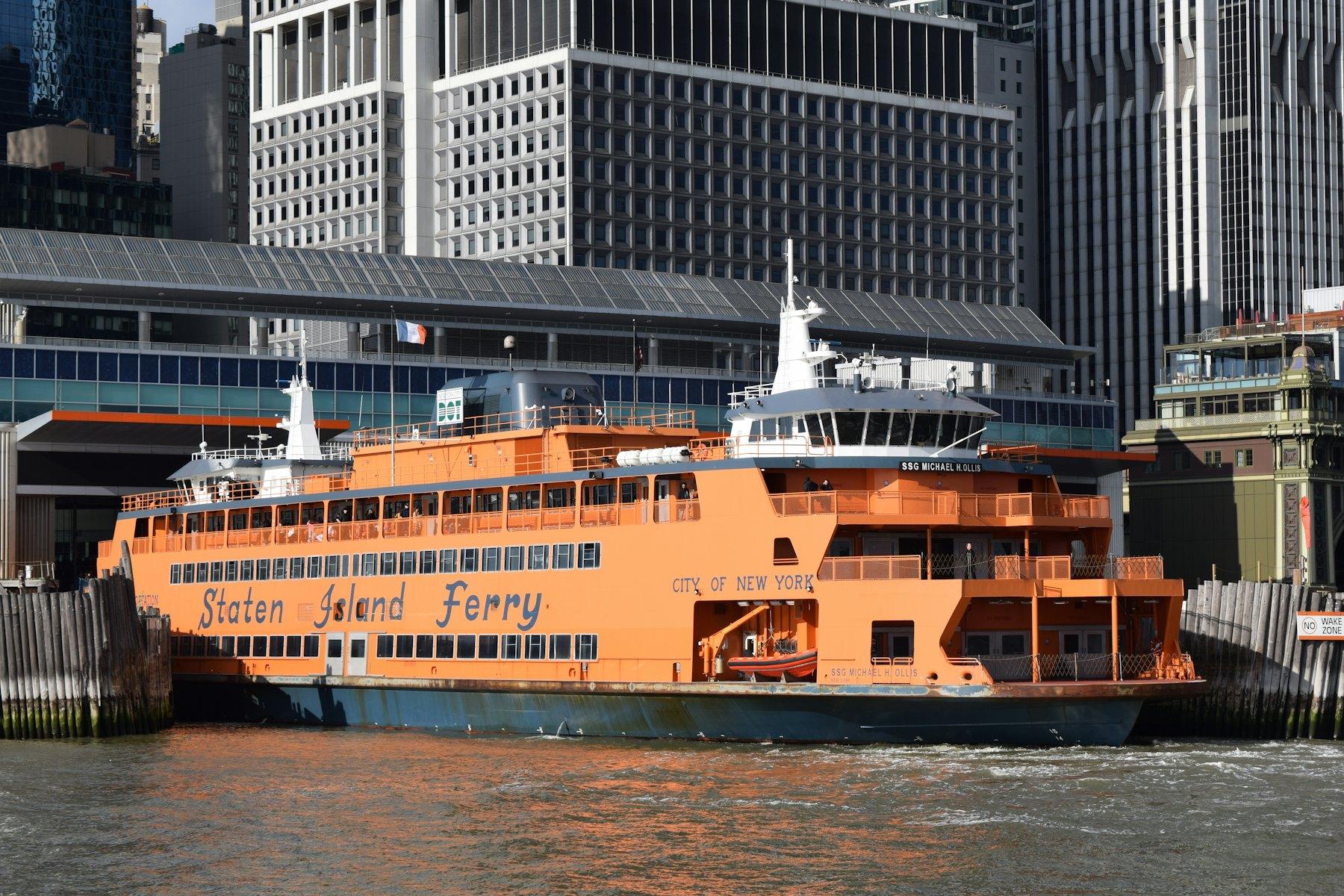
In New York, a ferry is not a tourist ride or a last resort. The Staten Island Ferry links Staten Island with Lower Manhattan as part of the city’s everyday transport network. It is free, it runs every day of the year, and it lands passengers a short walk from the subway.
We look at it here because the questions it answers are the ones our passenger jetty work faces in Lagos and the Niger Delta: what makes people choose the water, and what turns a landing point into part of a network.
- Operator
- NYC Department of Transportation
- Fare
- Free
- Service
- Every day, all year
- Crossing
- About 25 minutes
01A crossing built into a network
The ferry runs between St. George Terminal on Staten Island and Whitehall Terminal at the southern tip of Manhattan, a crossing of about 25 minutes in either direction. At Whitehall the boat is only half the journey. The terminal sits beside South Ferry, Whitehall Street and Bowling Green stations, so passengers step off the ferry and onto the subway in minutes.
Schematic · not to scale
02Five lessons for passenger jetties
Lagos and the Niger Delta are not New York, and their waterways carry traders, goods and communities as much as commuters. These are the principles we think travel well.
- 01
A jetty is an interchange, not an end point
Whitehall works because the walk to the next mode is short and obvious. Plan the connection to buses, roads and markets with the same care as the berth.
- 02
Reliability earns riders
A published timetable that runs every day, all year, lets people build their lives around the boat. Occasional service never becomes a habit.
- 03
Treat the water as a public road
New York runs the crossing as public infrastructure, free at the point of use. Fares and access policy decide who a jetty actually serves.
- 04
The terminal is a civic place
Shelter, safe boarding, clear information and step free access matter as much as the vessel. This is where accessibility is won or lost.
- 05
Someone owns the standard
A single accountable operator sets and keeps service standards. Whatever the ownership model, someone must answer for safety and reliability.
These principles shape our South-South passenger jetty proposal to NIMASA.
Sources
- 01NYC Department of Transportation: Staten Island Ferry. Operator, free fare and daily service
- 02NYC Department of Transportation: Staten Island Ferry schedule. Crossing time of approximately 25 minutes
Institutional engagement
Have a waterfront that should be part of the network?
We work with agencies, operators and communities on passenger jetties and maritime infrastructure.
Keep reading
More from the knowledge centre
 Benchmark study
Infrastructure competitiveness18 min read
Global Cities Standard Benchmark: a conditional assessment of Lagos infrastructure
Ten infrastructure systems, six reference cities and one question: is Lagos building for performance or for visibility? Our flagship study, with a scorecard, a sector by sector review and a proposed performance index.
 Perspective
Waterfront economies14 min read
The economics of inclusive, vibrant and resilient waterfronts
The best waterfront is not the one that maximises shoreline property values. It is the one that maximises participation, environmental performance and public value across the whole waterfront economy.
 Perspective
Urban philosophy9 min read
Urbansophy: the six places of a healthy city
Why do we still build cities that fail the people in them? Our philosophy of the city, from its five components to the six places every settlement needs.