BriefingMobility
Why new roads fill up: the congestion cycle
Adding road capacity is the instinctive answer to traffic. The evidence shows why it rarely lasts, and what a water city like Lagos can do instead.
RICITIES research · 7 min read
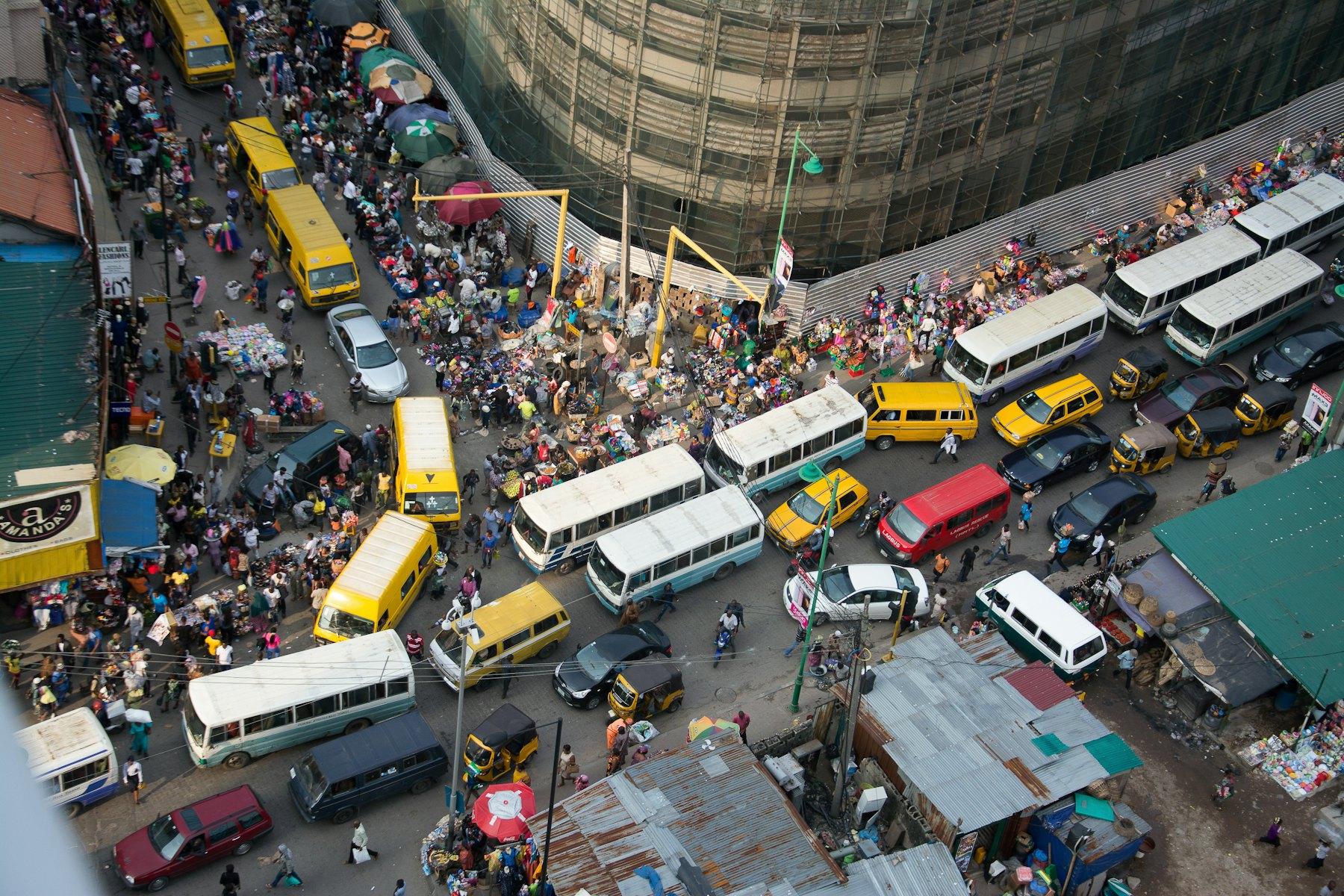
When roads are full, the instinctive answer is to build more of them. It feels like common sense: more space, less traffic. Transport researchers have studied that answer for decades, and the pattern they find is consistent. New road space tends to fill with new traffic.
The effect has a name, induced demand, and it works as a loop. Each stage seems reasonable on its own. Together they return the city to where it started, only larger, more spread out and more dependent on the car.
01The loop, step by step
The congestion cycle
- 01CongestionRoads fill beyond what they can carry and journeys slow down.
- 02Pressure to increase capacityDrivers, businesses and politicians call for wider roads and new links.
- 03New capacityLanes, flyovers and bridges are built. For a while, traffic flows.
- 04Lower friction to mobilityFaster journeys make each trip feel cheaper, so people travel more and further.
- 05Urban sprawl encouragedPeople trade more space for the same travel time, and the city spreads outward.
- 06Longer and more tripsMore people make longer journeys by road, and the new capacity fills. The loop closes.
02What the evidence says
The best known test of the loop comes from the economists Gilles Duranton and Matthew Turner. Studying cities across the United States, they found that vehicle kilometres travelled rose roughly one for one with new interstate highway capacity. Extra lanes generated their own traffic, from residents driving more, from more commercial traffic and from people moving in. They concluded that adding road capacity is unlikely to relieve congestion.
Their study holds a second, less comfortable finding: in their data, adding public transport did not measurably reduce driving either. The lesson is not that one alternative project will fix traffic. It is that capacity alone, of any kind, cannot outrun demand.
24%
of direct global CO₂ emissions came from transport in 2010.
75%
of those transport emissions came from road transport.
Figures as reported in Yigitcanlar and Kamruzzaman (2014), citing the transport literature.
The climate cost compounds the congestion cost. In their review of the research, Tan Yigitcanlar and Md. Kamruzzaman argue that sustainable cities need transport, land use and the environment planned together, and no longer in isolation from one another.
03Breaking the loop in a water city
Sources
- 01Rodrigue, J.-P. The Geography of Transport Systems: Vicious circle of congestion
- 02Duranton, G. and Turner, M. A. (2011). The Fundamental Law of Road Congestion: Evidence from US Cities. American Economic Review, 101(6), 2616–2652
- 03Yigitcanlar, T. and Kamruzzaman, M. (2014). Investigating the interplay between transport, land use and the environment: a review of the literature. International Journal of Environmental Science and Technology, 11(8), 2121–2132
Institutional engagement
Working on how a city moves?
We work with agencies and partners on waterways, clean mobility and the plans that connect them.
Keep reading
More from the knowledge centre
 Benchmark study
Infrastructure competitiveness18 min read
Global Cities Standard Benchmark: a conditional assessment of Lagos infrastructure
Ten infrastructure systems, six reference cities and one question: is Lagos building for performance or for visibility? Our flagship study, with a scorecard, a sector by sector review and a proposed performance index.
 Perspective
Waterfront economies14 min read
The economics of inclusive, vibrant and resilient waterfronts
The best waterfront is not the one that maximises shoreline property values. It is the one that maximises participation, environmental performance and public value across the whole waterfront economy.
 Perspective
Urban philosophy9 min read
Urbansophy: the six places of a healthy city
Why do we still build cities that fail the people in them? Our philosophy of the city, from its five components to the six places every settlement needs.